

Blog navigation

Latest posts

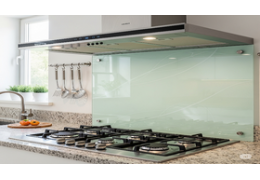
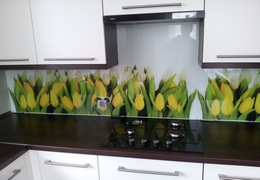
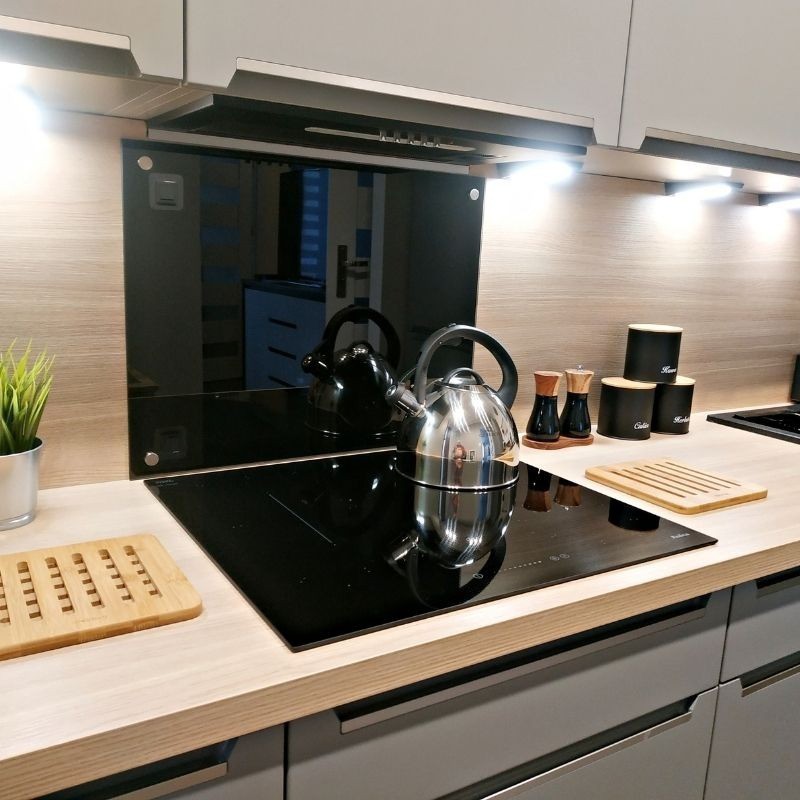
How can tempered glass transform your kitchen?
367 views

The article presents the use of custom-made tempered glass in the kitchen — as countertops, wall panels (backsplash),...

Read more
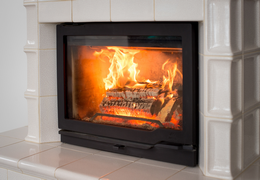
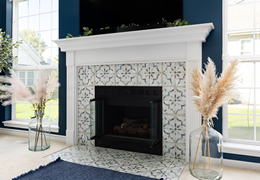
Self‑cleaning fireplace glass – is it worth investing in the ROBAX IR‑MAX technology?
361 views

The article presents SCHOTT's ROBAX IR-MAX self-cleaning glass, which uses a catalytic coating and the process of...

Read more
Properties of ROBAX IR-MAX Self-Cleaning Glass
1376 views

ROBAX IR-MAX self-cleaning glass is an advanced material designed for fireplaces, stoves, and industrial...

Read more
Glass Panels with Graphics in the Kitchen – How to Create a Unique Culinary Space?
443 views

The article is a comprehensive guide to modern glass panels with printed graphics for the kitchen. It outlines their...

Read more
Glass in Industrial Style – How to Use Glass in Raw Interiors?
328 views

The article discusses the use of tempered, lacquered, and printed glass in loft and industrial-style interiors. It...

Read more
 
Sort by:
  • Properties of ROBAX IR-MAX Self-Cleaning Glass
    Properties of ROBAX IR-MAX Self-Cleaning Glass
    1378 Views

    ROBAX IR-MAX self-cleaning glass is an advanced material designed for fireplaces, stoves, and industrial installations, distinguished by: A nanotechnological coating that facilitates the run-off of impurities and ash. Enhanced infrared radiation transmittance, which increases thermal efficiency. Resistance to thermal shock (up to over 700∘C) and mechanical damage. An ecological profile – lower water and detergent consumption, and extended lifespan. Thanks to these features, ROBAX...

    Read more
  • Self‑cleaning fireplace glass – is it worth investing in the ROBAX IR‑MAX technology?
    Self‑cleaning fireplace glass – is it worth investing in the ROBAX IR‑MAX technology?
    362 Views

    The article presents SCHOTT's ROBAX IR-MAX self-cleaning glass, which uses a catalytic coating and the process of pyrolysis to break down soot and dirt under high temperatures. As a result, users benefit from a clear view of the flames, over 70% less cleaning time, and reduced use of detergents—only needing to wipe the glass with a damp cloth every few weeks. Although the purchase price is higher, it is offset by the durability of the coating. It's important to ensure installation is carried...

    Read more
  • Painted glass vs. printed glass – which solution should you choose for a modern interior?
    Painted glass vs. printed glass – which solution should you choose for a modern interior?
    236 Views

    The article compares two popular glass solutions for modern interiors – Lacobel (painted glass) and glass with printed graphics. Here are the key takeaways: 1. Aesthetics Lacobel: A single-color, elegant, minimalist surface that visually enlarges the space. Printed glass: Full-color, customizable designs (photos, natural motifs, abstract patterns); a unique decorative accent. 2. Functionality and maintenance Both materials are resistant to moisture, steam, and high temperatures....

    Read more
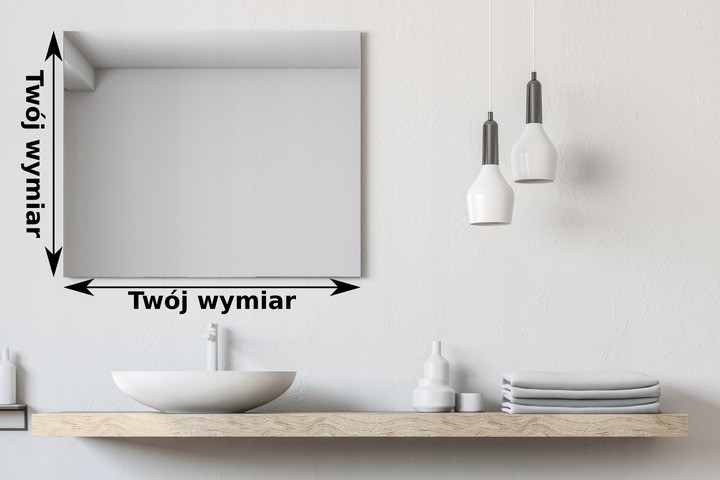
  • Custom Mirrors: How to Design the Perfect Mirror for Your Bathroom or Hallway?
    Custom Mirrors: How to Design the Perfect Mirror for Your Bathroom or Hallway?
    1544 Views

    This article discusses a comprehensive approach to designing and ordering custom mirrors for bathrooms and hallways. The author emphasizes the importance of precise measurements and choosing the right glass type (float, tempered, with anti-corrosion coating) and pane shape. Modern solutions such as LED backlighting, anti-fog systems, and smart mirrors with integrated functionalities are described. Opportunities for personalization are presented, including beveled edges, engravings, and...

    Read more
  • Framed Mirrors: Which One to Choose for Your Hallway/Vestibule?
    Framed Mirrors: Which One to Choose for Your Hallway/Vestibule?
    989 Views

    This guide summarizes the key aspects of choosing framed mirrors for hallways and vestibules, which serve both practical functions (checking appearance, optical enlargement) and decorative purposes. When selecting, consider size and proportions: opt for narrow, vertical models in small spaces, and larger forms as a strong accent in open interiors. Frames should be chosen to match the style: wood for classic and Scandinavian designs, metal for industrial interiors, and synthetic materials or...

    Read more
  • How to Choose a Mirror for Your Living Room?
    How to Choose a Mirror for Your Living Room?
    1058 Views

    This guide advises on how to select a living room mirror, focusing on size (min. 2/3 the length of the dominant furniture piece), shape (round, rectangular, irregular), and frame material (wooden, metal, frameless). It discusses the best mounting locations – most often opposite a window or as a central decorative element – and the technical aspects of safe hanging. The author presents current trends: compositions of multiple mirrors, designer frames as "works of art," and models with LED...

    Read more
  • LED Illuminated Mirrors How to Choose the Right Mirror for Your Bathroom?
    LED Illuminated Mirrors How to Choose the Right Mirror for Your Bathroom?
    1535 Views

    This is a brief summary of the article: Topic: A comprehensive guide to choosing an LED illuminated bathroom mirror. Advantages: Energy efficiency, even lighting, comfort for makeup application and shaving. Size and Format: Match width to the sink (80–120%), height 60–80 cm, minimum 10 cm clearance from the ceiling. Light Color Temperature: Warm (2,700–3,200 K), neutral (4,000–4,500 K), cool (5,500–6,500 K); CCT (Correlated Color Temperature) adjustment recommended. Power and Efficiency:...

    Read more
  • Self-Cleaning Heat-Resistant Glass How Does It Differ from Standard Heat-Resistant Glass
    Self-Cleaning Heat-Resistant Glass How Does It Differ from Standard Heat-Resistant Glass
    1510 Views

    Summary Self-cleaning heat-resistant glass is an innovative combination of temperature resistance up to 800–900°C with a special, photocatalytic coating (TiO₂). This coating uses UV rays to break down soot and grease, which are then easily rinsed away by water. Compared to standard heat-resistant glass, it eliminates the need for frequent manual cleaning, reducing operating costs and maintaining high transparency. It's used in fireplaces, stoves, fire doors, modern glass facades, as well as...

    Read more
  • How to Properly Install New Heat-Resistant Glass for Your Fireplace?
    How to Properly Install New Heat-Resistant Glass for Your Fireplace?
    2050 Views

    This article is a practical guide for replacing heat-resistant glass in your fireplace. It includes: A list of necessary tools and materials (glass, gasket, screwdriver, gloves, etc.) and safety rules (cold fireplace, hand protection). A detailed description of the steps: disassembling the old glass, removing and installing the new gasket, seating the glass, tightening fasteners, and a leak test during the first fire. Tips on common mistakes (e.g., overtightening, neglecting frame cleaning)...

    Read more
  • How to Properly Measure and Order Heat-Resistant Glass for Your Fireplace?
    How to Properly Measure and Order Heat-Resistant Glass for Your Fireplace?
    1623 Views

    Here's a concise summary of the article: This article is a practical guide on how to properly measure and order heat-resistant (ceramic) glass for your fireplace. It covers: Types of glass: Tempered vs. ceramic (ROBAX®, Neoceram® – recommended) Measurement steps: Removing the old glass or precisely measuring the opening, accounting for mounting clearance, determining thickness, shape, and locations for technical cutouts. Key parameters: Thickness (4–5 mm), thermal resistance above 800 °C,...

    Read more
  • Heat-Resistant Glass for Fireplaces: What Type of Glass Should You Use for a Fireplace?
    Heat-Resistant Glass for Fireplaces: What Type of Glass Should You Use for a Fireplace?
    1636 Views

    Summary of the Article on Heat-Resistant Fireplace Glass The best choice for fireplace doors is ceramic glass (e.g., Robax®, Neoceram), which resists temperatures up to 700–800 °C and thermal shock. Tempered glass (up to ~250 °C) and borosilicate glass (lower resistance) don't provide full safety in a fireplace. Key parameters include: certified thermal resistance (EN 12150-2, DIN, ISO), thickness of 4–6 mm, high light transmittance, and a tight seal for installation. Installation requires...

    Read more
  • UV Printed Glass – How to Personalize Home and Business Interiors?
    UV Printed Glass – How to Personalize Home and Business Interiors?
    1185 Views

    This article explores the modern UV printing technology for glass, which allows for durable, weather-resistant, and high-resolution prints. Thanks to UV-cured inks, photographs, graphics, and logos can be applied to kitchen panels, partition walls, doors, mirrors, and other glass elements in both home and commercial interiors. The author presents the advantages of this method, including durability, intense colors, and eco-friendliness. Current trends such as minimalism, botanical motifs, and...

    Read more
|<123>|
Showing 13 to 24 of 32 (3 Pages)

Follow us on Facebook